Boeing B- 52 strategic bomber
The Boeing B- 52 strategic bomber is a long-range subsonic jet strategic bomber designed and manufactured by Boeing.. The design of the B- 52 began in 1946, and the original prototype first flew in April 1952 and entered service in 1955. Its main task is to carry out nuclear deterrence tasks, but in actual combat, B- 52 only dropped regular munitions 1. The B- 52 can carry up to 70,000 pounds (about 32,000 kilograms) of weapons and has a typical operational range of about 8,800 miles (about 14,200 kilometers) without the need for aerial refueling.
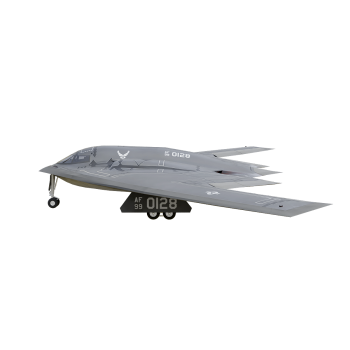
US Northrop Grumman B- 2 Spirit Bomber
Nicknamed "Ghost", it is a low-detectability flying wing bomber developed by Northrop Grumman and Boeing in conjunction with the Massachusetts Institute of Technology for the US Air Force. It is the world's only active stealth strategic bomber, known for its excellent stealth technology and long-range strike capabilities. Capable of penetrating advanced air defense systems and performing nuclear/regular strike missions. Stealth design is not limited to radar detection, but also includes reducing infrared, visible light and noise signals, greatly reducing the possibility of detection and locking. With its unique design and powerful combat capability, it has become the core of the US Air Force's strategic strike force.

American F-15EStrikeEagle Bombers
It is a two-seater, supersonic fighter-bomber developed by McDonnell Douglas (now Boeing) based on the F-15 Eagle air superiority fighter, designed for all-weather strike missions. Entered service with the United States Air Force in 1988, known for its dual mission air superiority and ground attack capabilities. It is similar in shape to the F-15D, but with a number of improvements, including increased range, doubling the number of weapon racks, and adopting a digital fly-by-wire control system with automatic terrain tracking capability and an advanced electronic cockpit display system. The design and capabilities have made it an important asset for the United States Air Force.

American F-22Raptor fighter
It is a single-seat and twin-engine fifth-generation stealth fighter jointly developed by Lockheed Martin and Boeing. It is the first fifth-generation fighter in the world to enter service. It is known for its excellent stealth performance, supersonic cruise capability, high maneuverability, advanced avionics system and highly integrated sensors. The main task is to ensure the air superiority of the theater, but also has the ability to attack the ground, electronic warfare and signal intelligence. Adopt the regular aerodynamic layout of the camber double vertical tail, with low detectability design. It officially entered service in 2005, replacing the F-15 Hawk as the main fighter of the US Air Force.

American F-35LightningII fighter
It is a single-seat single-engine multi-purpose fighter designed and produced by Lockheed Martin of the United States. It belongs to the fifth-generation stealth fighter. As the fifth-generation fighter introduced by the most countries in the world, F-35 has the characteristics of stealth capability, complex integrated electronic control system, versatility and versatility. Mainly used for close support, target bombing, air defense interception and other missions. Stealth design draws on a lot of F-22 technology and experience, avionics system is also a major highlight of the F-35. It is the result of multinational cooperation, its combat capability is only inferior to that of F-22A, and will be the main force of the air combat of the United States and its allies in the 21st century.

American B- 58Hustler Bombers
It was a supersonic bomber developed by Cornwell in the 1950 s for the United States Air Force Strategic Command. As the first practical supersonic bomber equipped by the US Air Force, it aims to break through the enemy's air defense system at high speed and perform nuclear strike missions. Design features include its unique delta wing design, four General Electric J79 turbojet engines, and a streamlined fuselage. The weapons payload includes a free-fall nuclear bomb and four external hard points added in subsequent models to carry more nuclear weapons. It first flew in 1956 and officially entered service in 1960.

American YF-23BlackWidowII fighter
It is an advanced stealth air superiority fighter jointly developed by Northrop/McDonnellDouglas. It participated in the competition of the advanced tactical fighter program of the US Air Force, competed with Lockheed's YF-22 prototype, and finally YF-22 won and became the F-22Raptor. It stands out for its unique design and advanced characteristics. Although it failed to win the contract, its design and technological innovation have had an impact on subsequent aircraft development. Design features include a diamond-shaped airfoil and a unique V-shaped tail, which contribute to its stealth capabilities.
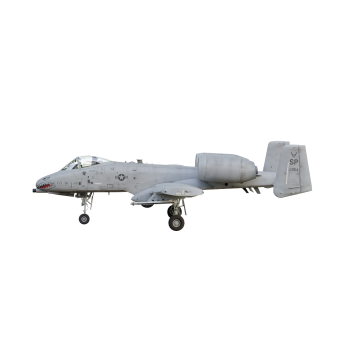
American A- 10ThunderboltII attack aircraft
Officially known as "Thunderbolt II", but more commonly known as "Warthog", it is a single-seat, twin-engine attack aircraft produced by Fairchild Corporation of the United States, specifically designed to provide close air support to ground forces and front-line air control. The design emphasizes maneuverability, survivability and precision strike capability against ground targets at low altitude and low speed. The main weapon was its built-in 30mm GAU-8/A seven-barrel Gatling gun, capable of firing huge armor-piercing shells that were extremely effective against armored targets. Since its first service in 1975, it has participated in numerous conflicts and wars, proving its effectiveness on the modern battlefield.

United States RC-135SCobraBall Special Aircraft
It is a special aircraft of the United States Air Force specially used for reconnaissance of ballistic missiles. Based on C- 135 transport aircraft, it entered service in 1970 and is designed to collect optical and electronic data to support compliance verification of arms control treaties and the development of U.S. strategic defense and theater missile defense concepts. Its airborne electronic reconnaissance equipment can collect, process and analyze the radio frequency of missile guidance and related information, which is an important part of the US theater missile defense program. Equipped with high-precision optical detection device, the detection range can reach 402 kilometers, can measure the warhead loaded into the atmosphere, and quickly calculate the trajectory and ballistic point.

A-10 Thunderbolt Attack Aircraft (Nickname: Thunderbolt II)
The A-10 attack aircraft (English: A-10, nickname: Thunderbolt II, translation: Thunderbolt II, often nicknamed "Warthog" or simply "Hog" by the US military, commonly known as the Fairchild A-10 "Thunderbolt II" attack aircraft) is a single seat twin engine attack aircraft of the United States. The A-10 attack aircraft relies on powerful firepower specifically for ground attacks and is the only model currently in service in the US Air Force responsible for providing intensive support missions to ground forces, including attacking enemy tanks, armed vehicles, important ground targets, etc.

Boeing VC-25
It is a military version of the Boeing 747 aircraft specially modified by the United States Air Force (USAF) for presidential transport, commonly referred to as "Air Force One", which is the call sign for any U.S. Air Force aircraft carrying the President of the United States. At present, there are only two aircraft of this model in service, which are highly modified Boeing 747-200B, model VC-25A, with tail numbers 28000 and 29000 respectively. Although technically, the term 'Air Force One' is only applicable when the President is on board the aircraft, it is commonly used to refer to the VC-25 aircraft.

During World War II, the American bomber SBD Dauntless dive bomber
The SBD Dauntless was a three seat single engine carrier based dive bomber developed by Douglas Company in the United States, primarily active on the Pacific theater during World War II. In the early 1930s, with the help of a large number of government orders, the United States recovered from the catastrophic economic crisis, and its naval strength was strengthened due to the policy of expanding orders. In 1934, the United States Naval Aviation Administration began to replace its complex and disorganized carrier based dive bombers with a unified aircraft model.

During World War II, the American fighter P-51B
The P-51B fighter was one of the main fighter planes of the United States Army Air Forces during World War II, and it made its maiden flight in 1940. The P-51B fighter jet is a model of the American North American company's P-51 Mustang, originally designed by the North American Aircraft Company in 1940 to replace the large number of P-40Ds provided by the United States to Britain as a replacement for the British fighter jet. On October 26 of the same year, the first prototype successfully flew, with the factory code NA-73 and the nickname "Wild Horse". The first batch of "Wild Horse" B was delivered to Britain in August 1941, and the actual combat test results were excellent.

Popular Models

Honey Badger (3D animated model)
194 View
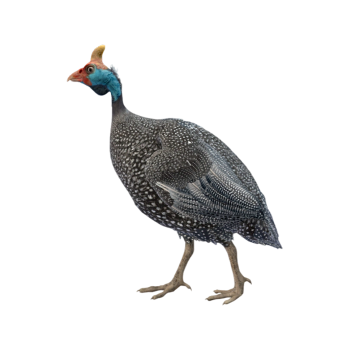
Guinea fowl (3D animated model)
165 View
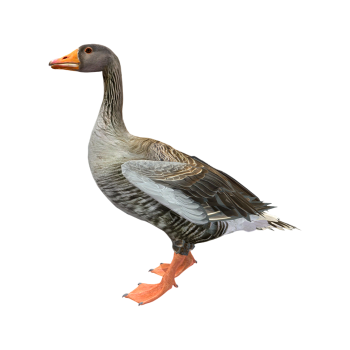
Wild Goose (3D animated model)
187 View
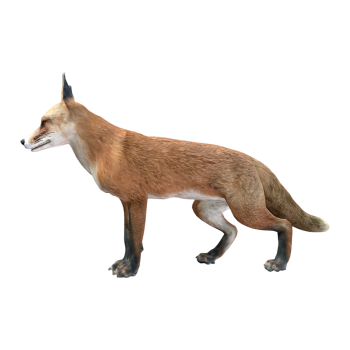
Red Fox (3D animated model)
155 View
Random Model
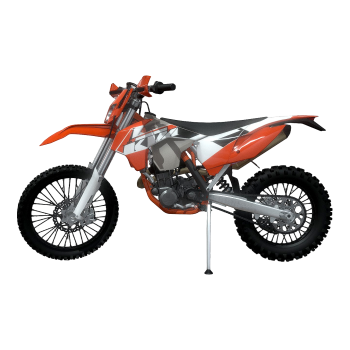
KTM 120 off-road motorcycle
852 View


Portable Military Kettle
899 View
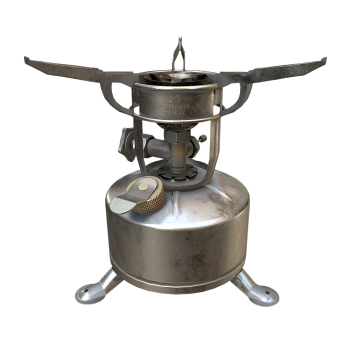
United States Army Field Furnace
374 View

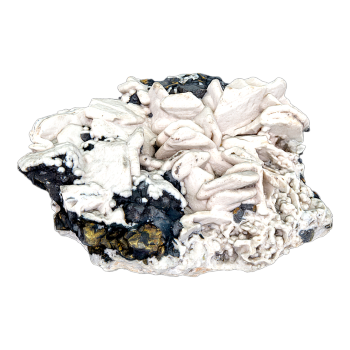
Ore-bearing fibrous calcite
953 View
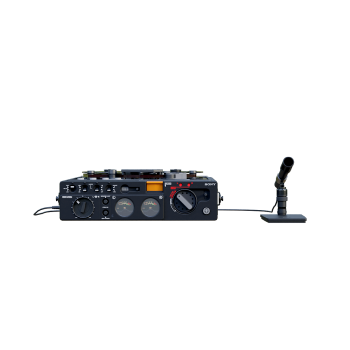
Sony TC-510-2 tape recorder
911 View
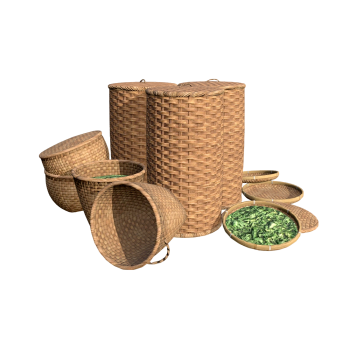
Bamboo storage basket and dustpan
417 View
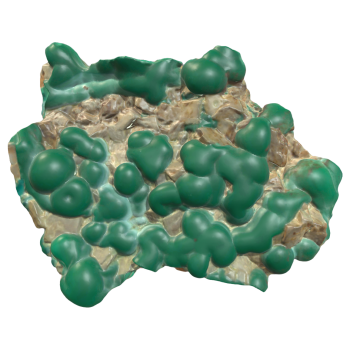
Malachite
787 View